Loading…
17-18 September | Amsterdam, Netherlands
View More Details & Registration

IMPORTANT NOTE: Timing of sessions and room locations are subject to change.
Venue: G102 + G103 (Level 1) clear filter
arrow_back View All Dates
Thursday, September 17
 

10:10 CEST

The Modern AI Stack: Agents, MCP and Skills - Adewale Abati, Block
Thursday September 17, 2026 10:10 - 10:35 CEST
Agent harnesses. MCP. Skills. MCP Apps. If you've been watching the AI space and feeling like everyone else already understands something you don't, this talk is for you.

I've spent the last several months building with each layer of the modern AI stack, and what I kept finding was that the concepts aren't as hard as the terminology makes them sound. Nobody had just sat down and explained what each piece actually is, what problem it solves, and how they fit together. So that's this talk. Technical enough to be useful, grounded in real workflow experience, and paced so that by the end you have a clear mental model of where AI tooling actually stands today and where you fit in it.
Speakers
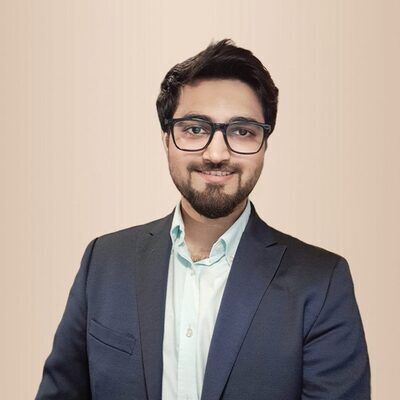
avatar for Adewale Abati

Adewale Abati

Staff Developer Advocate, Block
Adewale "Ace" Abati is a Web Engineer and Staff Developer Advocate currently helping to shape the future at Block. Ace is passionate about the Web, Open Source and community building, an avid gamer and shares his experience through public speaking and content across social media... Read More →
Thursday September 17, 2026 10:10 - 10:35 CEST
G102 + G103 (Level 1)

10:45 CEST

Legal Implications Under EU Law When Deploying AI Agents - Mirela Takacs, Law Office Takacs Mirela
Thursday September 17, 2026 10:45 - 11:10 CEST
This presentation highlights general rules that any engineer should keep in mind before implementing an AI agent, around one core idea: legislation should be treated as part of the system architecture. At EU level, the AI Act is the central regulation, but adjacent European legislation may also be activated based on the AI agent’s actions.
Translating legal obligations into technical requirements from the design stage makes deployment safer and more compliant. Five practical takeaways help in doing that:
1. compliance should not be seen as a one-time check, but as a continuous monitoring and evaluation process
2. it demands interdisciplinary work from the design phase, not a back-and-forth decision chain
3. the agent is a system, not a legal person, so the ones held accountable are the humans behind it
4. a clear map of what the agent does, accesses, and produces is what lets you navigate the law
5. there is no universal rule applicable: start with the AI Act, then identify the adjacent legislation activated by the agent’s specific functions
The goal is to design agents that are safe, compliant and genuinely useful, by treating law as an architectural concern, not bureaucracy.
Speakers
avatar for Mirela Takacs

Mirela Takacs

Lawyer, Law Office Takacs Mirela
I began my professional journey as an OSS Compliance Specialist, reviewing open-source components integrated into software products. Later, qualifying as a lawyer in Romania, I developed my legal analytical skills and gained experience in negotiating commercial agreements and handling... Read More →
Thursday September 17, 2026 10:45 - 11:10 CEST
G102 + G103 (Level 1)

11:20 CEST

CHAP, an Open Protocol for Auditable Human-Agent Collaboration - Dr Arsalan Shahid, Brightbeam AI
Thursday September 17, 2026 11:20 - 11:45 CEST


The next phase of agents is not one human supervising one model. It is multi-human, multi-agent work across teams, tools, and trust boundaries. The decisive moments are not model outputs; they are human approvals, edits, overrides, escalations, and handoffs, and the rationale behind them. Today those moments leak into chat logs, tickets, and application code, where they cannot be replayed or audited.

CHAP, the Collaborative Human-Agent Protocol, gives this shared workspace a protocol layer. A small Core (workspaces, participants, tasks, artefacts, and an append-only evidence log) carries composable profiles for review, structured override, operating modes, handoff, deliberation, identity, and signed audit. It composes with MCP and A2A rather than replacing them: MCP connects agents to tools, A2A connects agents to agents, CHAP lets humans and agents do accountable work together.

The talk covers the protocol gap, the Core primitives, a worked 'override as evidence' flow, and lessons from building the open reference implementations and conformance harness. Spec, code, and examples are public.

Paper: https://arxiv.org/abs/2606.09751
Repo: https://github.com/BrightbeamAI/chap
Speakers
avatar for Dr Arsalan Shahid

Dr Arsalan Shahid

Principal Solutions Director, Brightbeam AI
Arsalan Shahid is Principal Solutions Director at Brightbeam AI and co-author of CHAP. He leads AI R&D for clients in regulated manufacturing, biopharma, and financial services. Previously a Principal Investigator at CeADAR, Ireland's centre for applied AI, he worked with startups... Read More →

Thursday September 17, 2026 11:20 - 11:45 CEST
G102 + G103 (Level 1)

11:55 CEST

From Opaque To Observable: Tracing Multi-Agent OpenClaw Workflows With OpenTelemetry - Pavan Sudheendra, Cisco Systems
Thursday September 17, 2026 11:55 - 12:20 CEST
Agent systems are getting more capable, but they are still hard to operate when a single user request fans out across multiple agents, tools, model calls, queues, and outbound messages. In this session, we will walk through how we built an open observability plugin for OpenClaw (InsightClaw) that turns that opaque execution path into a connected telemetry story using OpenTelemetry.

The talk covers a practical design that combines three signal paths: typed lifecycle hooks for request, agent, tool, and response flow; diagnostics events for model usage, cost, queue, webhook, and stuck-session signals; and optional provider SDK auto-instrumentation for GenAI calls. Together, these produce connected traces, useful operational metrics, and cross-session lineage for handoffs, spawned subagents, and parallel branches.

We will show the trace model we used, the session semantics we had to define for real workflows, and the engineering tradeoffs around payload capture, runtime patching, and correlating control-plane events with agent execution.
Speakers
avatar for Pavan Sudheendra

Pavan Sudheendra

Engineering Technical Leader, Cisco Systems
Pavan Sudheendra is a Technical Lead at Outshift by Cisco, where he leads technical efforts on distributed systems and emerging multi-agent architectures. His work is focused on the intersection of agentic AI and system design at scale. He is an active contributor to the LF ecosystem... Read More →
Thursday September 17, 2026 11:55 - 12:20 CEST
G102 + G103 (Level 1)

12:30 CEST

A2A Goes Stable: What Changed, Why, and What's Next - Sam Betts, Cisco Systems & Kuba Herczyński, Google
Thursday September 17, 2026 12:30 - 12:55 CEST
A2A Protocol v1.0 is the first stable, production-ready release of the open standard for agent-to-agent communication — marking the transition from a protocol you could experiment with to a foundation organisations can commit to with confidence.

This talk is delivered by two maintainers who helped shape the release. We cover what changed from v0.3 and why: the deliberate choice to prioritise maturity over reinvention, new enterprise capabilities — signed Agent Cards, multi-tenancy, modern OAuth flows, and a web-aligned architecture — and the breaking changes that were unavoidable on the path to a durable standard.

We also cover the SDK story: how official SDKs support v1.0 while maintaining backward compatibility with v0.3, and a per-interface versioning strategy that makes progressive migration practical rather than a forced cutover.

Finally, we look at extensibility: how extensions add capabilities while keeping a stable core, and how custom protocol bindings let implementations replace the default transport while preserving A2A semantics.

If you are building on A2A today or evaluating it, this talk gives you a clear picture of what changed, why, and how to migrate.
Speakers
avatar for Sam Betts

Sam Betts

Engineering Technical Leader, Cisco Systems
Sam Betts is an Engineering Technical Lead at Outshift by Cisco with over 14 years of experience building cloud-native platforms, security solutions, and AI-driven systems. He has led development on OpenClarity, Cisco Panoptica, and OpenStack Ironic, and actively contributes to AGNTCY... Read More →
avatar for Kuba Herczyński

Kuba Herczyński

Staff Software Engineer, Google
Kuba is a Software Engineer turned Technical Lead at Google with over 15 years of experience building things. Lately most interested in AI Agents, actively involved in A2A for almost a year - both in the protocol spec as well as it's adoption at Google.
Thursday September 17, 2026 12:30 - 12:55 CEST
G102 + G103 (Level 1)

13:05 CEST

Composable, Low-code Agent Systems With the Tools You Already Have - Adam Jones, Anthropic
Thursday September 17, 2026 13:05 - 13:30 CEST
You don't write a pile of glue code to onboard a new hire — you give them an account and point them at a few channels. So why do we hardcode workflows and wire up orchestration SDKs to put AI agents to work?

There's a lighter path: let agents coordinate the way people already do — by tagging each other and posting into channels — so the system is something you own and shape rather than something you engineer. This talk makes the case for that low-code, team-owned approach, the patterns that make it work, and the surprising amount of custom infrastructure it lets you delete.
Speakers
avatar for Adam Jones

Adam Jones

Member of Technical Staff, Anthropic
Adam Jones is a member of technical staff at Anthropic working on RL research, a maintainer of many open-source MCP servers and tools, and a maintainer of the Model Context Protocol (MCP) registry.
Thursday September 17, 2026 13:05 - 13:30 CEST
G102 + G103 (Level 1)

15:45 CEST

Sandboxing My AI Agent, One Layer at a Time - Juan Antonio Osorio, Stacklok Inc.
Thursday September 17, 2026 15:45 - 16:10 CEST
We hand coding agents our workspace, our keys, and a shell, then walk away while they run code generated at runtime from untrusted input: files in the repo, docs fetched off the web, output from MCP servers nobody audited. The obvious fix is isolation: give every agent its own kernel. So we start there, running Claude Code, Codex, and others inside sub-second, hardware-isolated microVMs (libkrun/KVM), where even root in the guest is stuck behind the hypervisor's MMU boundary, not just a shared-kernel namespace.

But isolation on its own isn't enough. An isolated agent can still read the .env beside your code, exfiltrate it, wreck your workspace, or abuse a tool you never vetted. So we add defenses, live, one layer at a time: copy-on-write workspace snapshots with a per-file review gate, non-overridable secret exclusions, a DNS-aware egress firewall, a hardened Wolfi guest (custom Go PID 1, dropped capabilities, seccomp, no-new-privs), and an MCP proxy with Cedar authorization profiles. We finish on the attack surface most tools forget: the security tool's own config.

It's all Apache-2.0. The lesson carries to any agent you run: isolation is the floor, not the ceiling.
Speakers
avatar for Juan A. Osorio

Juan A. Osorio

Principal Engineer, Stacklok Inc.
Juan Antonio "Ozz" Osorio is a Mexican software engineer living in Finland. His background spans security for OpenStack, Kubernetes, and bare metal environments. Currently at Stacklok, he founded the ToolHive project and has been building MCP infrastructure, including supply chain... Read More →
Thursday September 17, 2026 15:45 - 16:10 CEST
G102 + G103 (Level 1)

16:20 CEST

What Networking Got Right That Agentic AI Risks Getting Wrong: The Case for an Agent Control Plane - Parisa Foroughi, Nokia
Thursday September 17, 2026 16:20 - 16:45 CEST
Every major agent orchestration framework today conflates task execution with the control layer that should govern authority and policy. This talk argues for a cross-domain agent control plane: a runtime layer external to the agent that performs authority checks and policy enforcement at defined boundaries, independent of the agent’s internal logic. Grounded in inter-domain routing, it proposes a semantic model built on five invariants: domain boundary as the control unit, boundary-crossing capability classes as the permission unit, scope-narrowing delegation with bounded elevation, unbroken provenance to a registered trust anchor, and boundary enforcement without inspecting internal behavior or payload content. The model introduces two runtime artifacts: the Agent Control Envelope (ACE) for authorization and the Agent Activity Envelope (AAE) for behavioral constraint. Attendees will leave with a precise mental model, two concrete artifacts, and a clear argument for why agent interoperability needs explicit boundary semantics before wire formats harden around the wrong primitives.
Speakers
avatar for Parisa Foroughi

Parisa Foroughi

Senior research specialist, Nokia
Parisa Foroughi is a Senior Research Specialist at Nokia working at the intersection of agentic AI systems, large-scale distributed networks, and standardization. Her work bridges gaps between emerging AI capabilities and production systems, combining hands-on insights with system-level... Read More →
Thursday September 17, 2026 16:20 - 16:45 CEST
G102 + G103 (Level 1)

16:55 CEST

Skills Need SemVer Too - Pedro Rodrigues, Supabase
Thursday September 17, 2026 16:55 - 17:20 CEST
The agent ecosystem is converging on a common way to discover skills, making it easier for agents to find and load domain-specific knowledge. But discovery only solves the first problem.

Once skills become part of production workflows, they need to evolve. Instructions change, best practices improve, and capabilities grow. Without a way to version and manage those changes, agents risk relying on outdated or incompatible knowledge.

In this talk, I’ll explore lessons learned from publishing and distributing skills at scale, discuss the emerging standards around skill discovery, and propose a framework for skill versioning, compatibility, and evolution. If skills are becoming the package ecosystem for agents, it’s time to start thinking about dependency management too
Speakers
avatar for Pedro Rodrigues

Pedro Rodrigues

AI Tooling Engineer, Supabase
I’m an AI Tooling Engineer at Supabase, part of the team maintaining all AI initiatives including our MCP server, AI assistant, and Skills. I’ve been involved with the MCP protocol since its early days, contributing to its SDKs and projects like Skybridge. I’ve spoken at MCP... Read More →
Thursday September 17, 2026 16:55 - 17:20 CEST
G102 + G103 (Level 1)

17:30 CEST

MAS-Lab: An Open Framework for Spec-Driven, Interoperable Multi-Agent Systems - Jordan Augé, Cisco Systems
Thursday September 17, 2026 17:30 - 17:55 CEST
Building multi-agent systems for production remains challenging, not only due to integration complexity, but because validating that systems behave as intended is still largely unsystematic. Teams hand-wire LLMs, tools, and memory, add observability late, and lack clear ways to ensure agent interactions remain reliable and aligned as systems evolve.

This session introduces MAS-Lab, an open, spec-driven framework that makes agent systems composable and verifiable. It extends the integration discipline of protocols like MCP and A2A to all components -- models, tools, memory, messaging, governance, and observability -- through declarative specifications. The result is systematic integration, built-in observability, and reusable best practices.

During the session, we demonstrate a multi-agent trip planner and show how a single spec enables teams to compose agents, apply governance controls such as budgets and guardrails without modifying logic, and validate behavior by exploring alternative designs through reproducible experiments.

Attendees will leave with practical patterns to ensure agent systems behave predictably, remain aligned with intent, and can be trusted in production.
Speakers
avatar for Jordan Augé

Jordan Augé

Tech Lead, Outshift@Cisco - Chair of Accuracy and Reliabiity WG, Cisco Systems
Tech lead at Cisco Outshift, where he builds open-source infrastructure for multi-agent AI. Creator of MAS-Lab, an open framework for spec-driven, interoperable agent systems that decouples runtime, control, and infrastructure. Chair of the AAIF Accuracy & Reliability Working Group... Read More →
Thursday September 17, 2026 17:30 - 17:55 CEST
G102 + G103 (Level 1)
 
Share Modal

Share this link via

Or copy link

Filter sessions
Apply filters to sessions.
Filtered by Date -